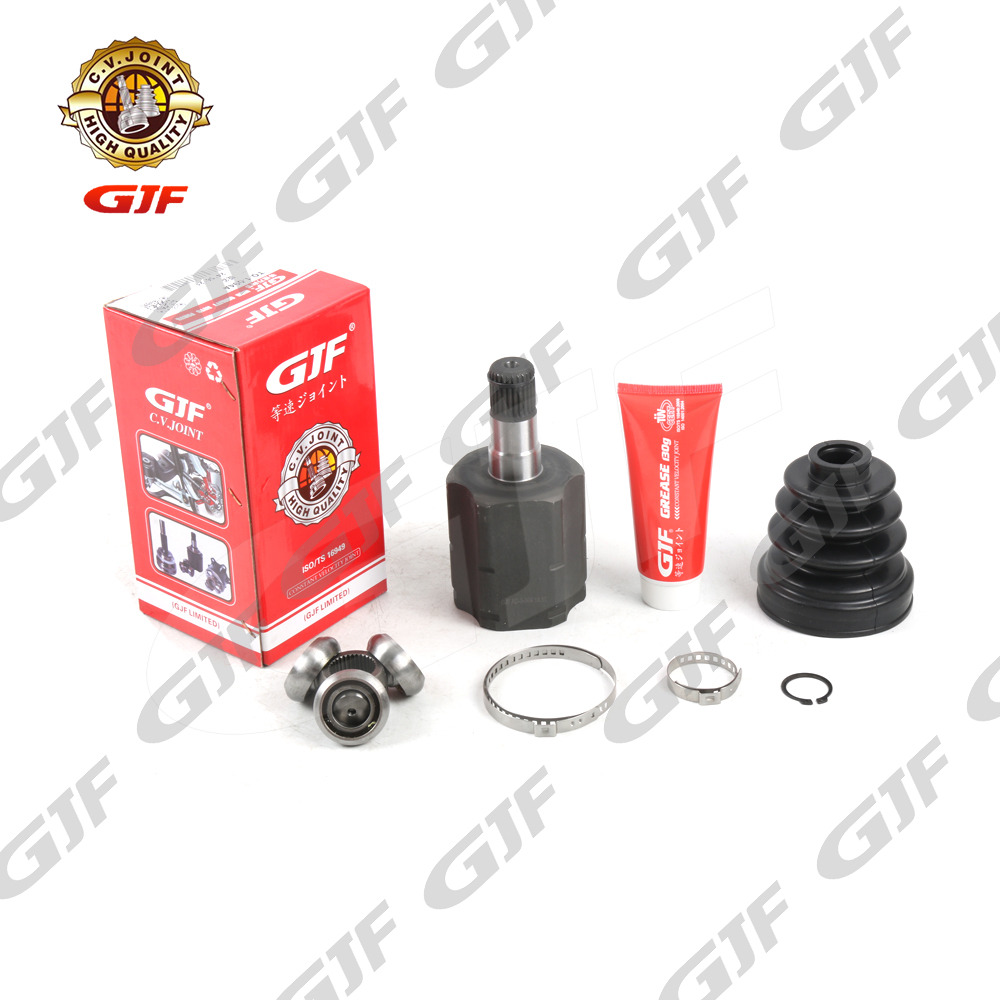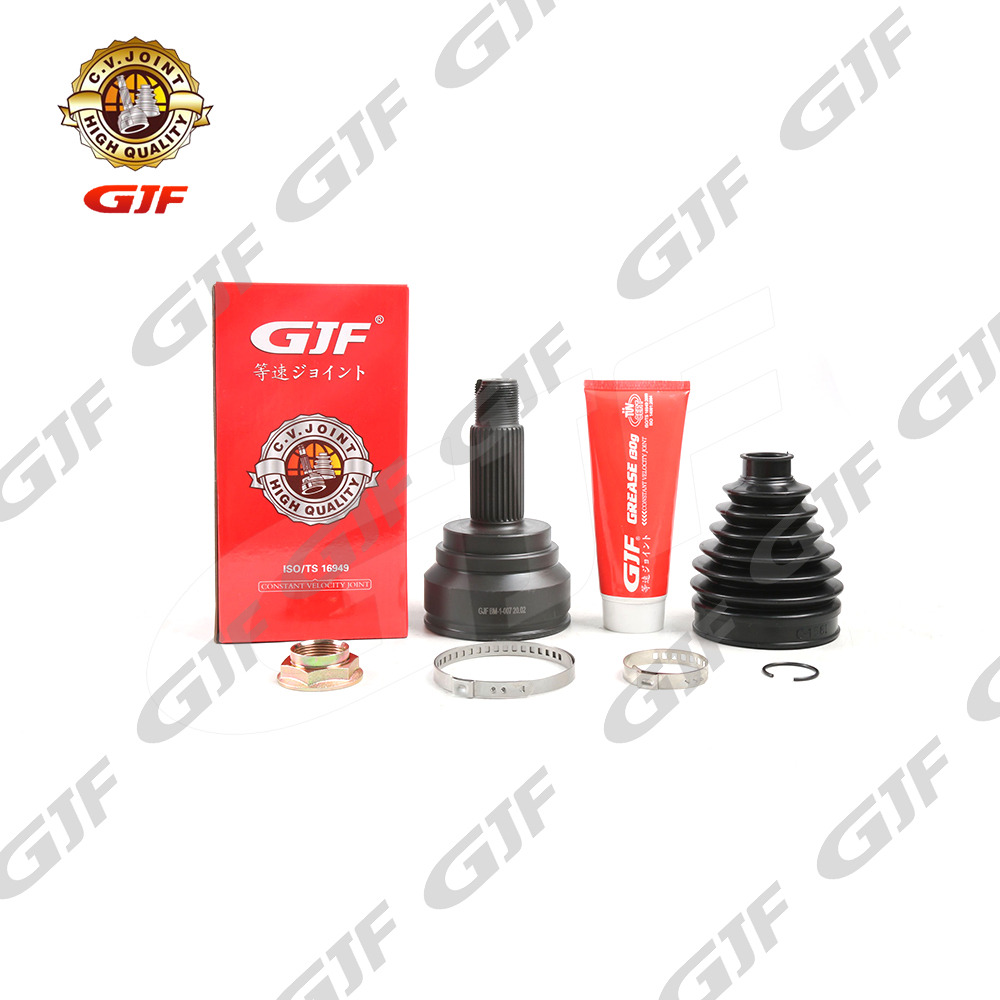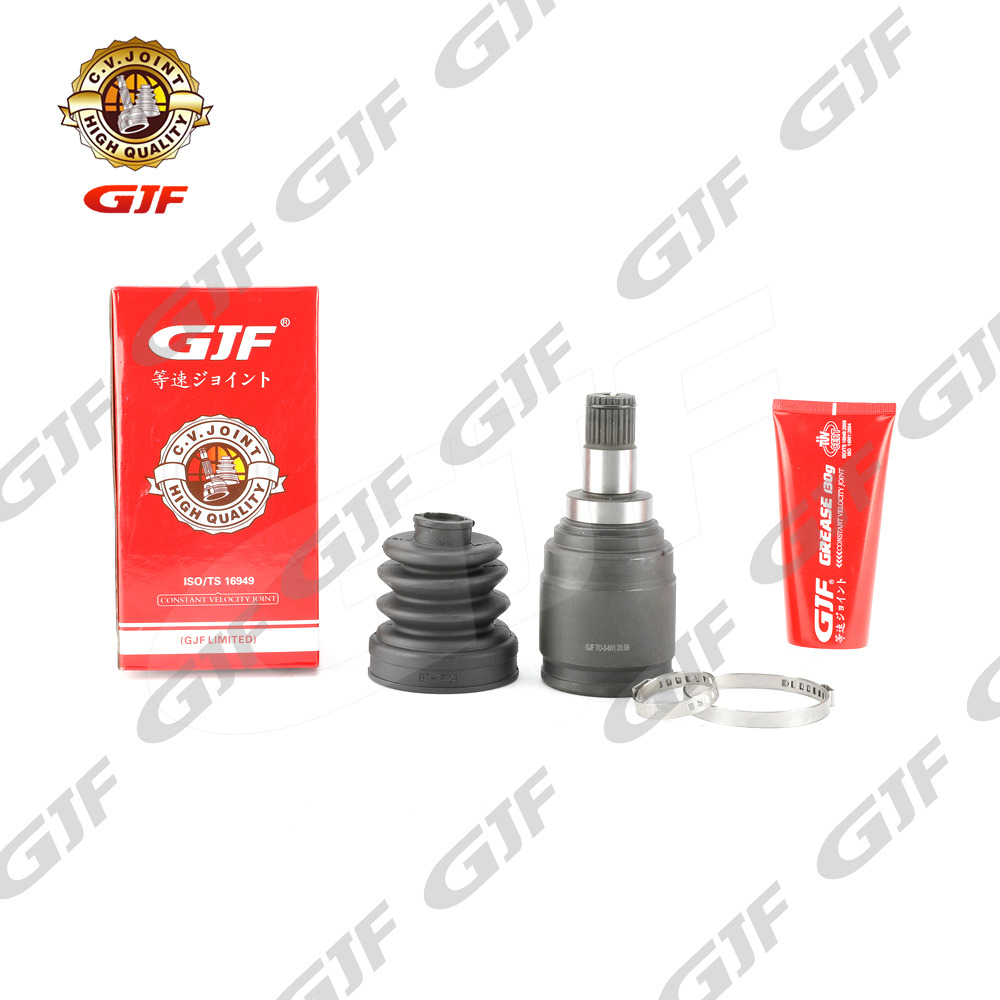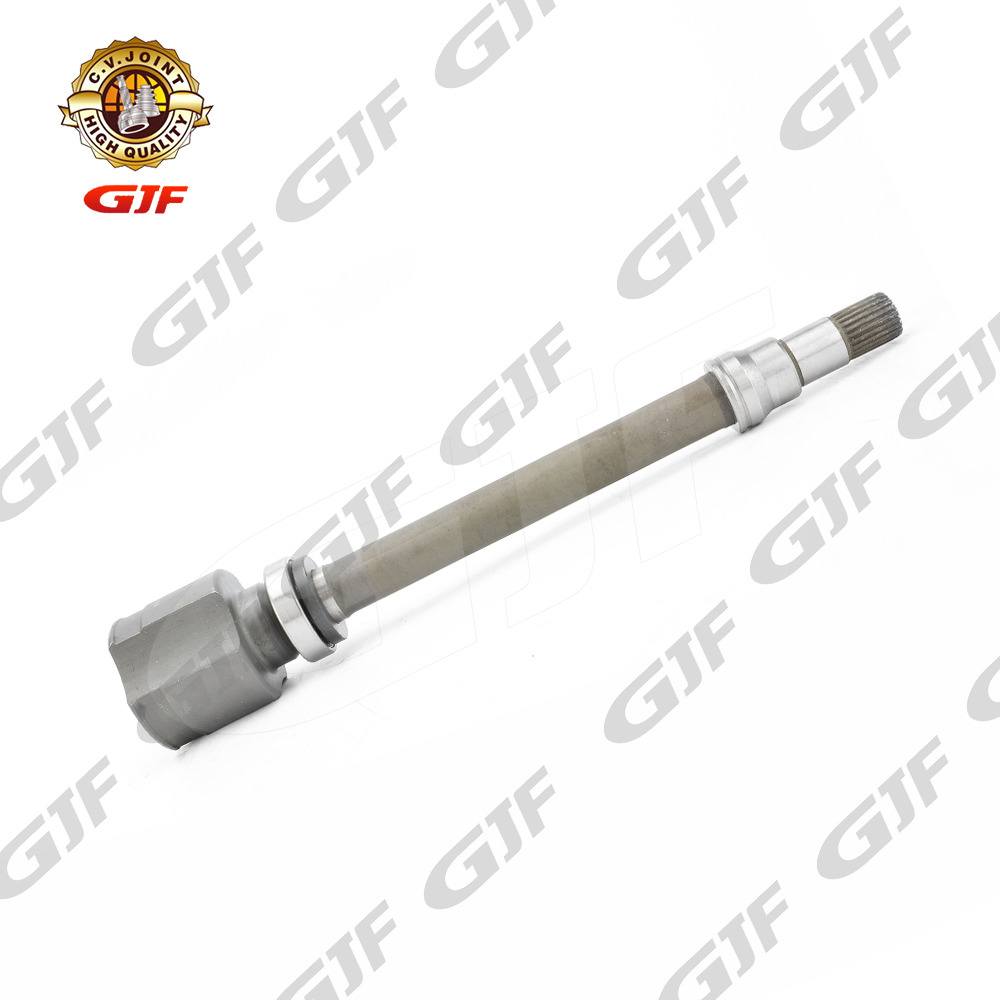
Sobre GJF
GJF se rige por la filosofía de cooperación basada en «integridad, innovación, altruismo y beneficio mutuo». Nos dedicamos de todo corazón a servir a nuestros clientes y nuestro objetivo es lograr situaciones de beneficio mutuo en el futuro mercado de recambios de automoción.
Obtener presupuesto gratis
Noticias

23
Jun
How To Fix Inner Cv Joint - GJF
How To Fix Inner CV Joint - GJF
An inner CV joint transfers power from the transmission or differential to the drive shaft while allowing smooth movement as the suspension operates. Like other drivetrain components, it can wear over time because of high mileage, damaged CV boots, insufficient lubrication, contamination, or heavy use.
If you notice vibration during acceleration, clunking, shuddering, or grease leakage, the inner CV joint should be inspected.
But how to fix an inner CV joint? The answer depends on the condition of the joint. A damaged CV boot may only require boot replacement, while a worn or damaged joint usually needs to be replaced.
If you are unsure whether your inner CV joint is damaged, first read our guide on How To Know If Inner CV Joint Is Bad to identify the common warning signs.
Can an Inner CV Joint Be Fixed?
Yes, but not every damaged inner CV joint can be repaired.
If the CV boot is torn but the joint has not suffered internal damage or contamination, replacing the boot and renewing the correct grease may be enough.
If the joint has excessive play, damaged rollers, worn contact surfaces, or other internal damage, replacing the complete inner CV joint is generally the better solution.
Before repairing a CV joint, always inspect the joint itself rather than assuming that the boot is the only problem.
Signs Your Inner CV Joint Needs Repair
Common signs that an inner CV joint needs attention include:
- Vibration during acceleration
- Shuddering under load
- Clunking when accelerating or decelerating
- Excessive movement or play
- Grease leaking from the CV boot
- Cracked or torn CV boot
- Unusual drivetrain noise
These symptoms can also be caused by other drivetrain or suspension components. A proper inspection is important before replacing the joint.
How To Fix an Inner CV Joint
The exact procedure varies by vehicle and CV joint design. Always follow the vehicle manufacturer's service instructions.
1. Inspect the Inner CV Joint
First, confirm that the inner CV joint is the source of the problem.
Check for abnormal vibration, noise, excessive play, damaged components, and grease leakage. Inspect the CV boot for cracks, tears, and loose clamps.
If the boot is damaged but the joint remains in good condition, a CV boot replacement may be possible.
2. Remove the Drive Shaft
If the joint requires repair or replacement, remove the drive shaft according to the vehicle manufacturer's procedures.
Different vehicles use different mounting and retention systems, so the correct removal method will vary.
Once removed, inspect the drive shaft and surrounding components for additional damage.
3. Remove and Inspect the Joint
Remove the inner CV joint as required by the specific design.
Clean away old grease and carefully inspect the internal components. Look for:
- Excessive wear
- Pitting or scoring
- Damaged rollers or bearings
- Metal particles
- Rust or corrosion
- Abnormal play
If the internal components are significantly worn or damaged, replacing the joint is normally preferable to attempting to repair individual parts.
4. Replace the Boot or CV Joint
If only the boot is damaged, install a suitable replacement boot and the correct CV joint grease.
If the joint itself is worn or damaged, install a compatible replacement inner CV joint.
During assembly:
- Use the correct replacement parts
- Apply the specified grease
- Position the boot correctly
- Secure the clamps properly
- Keep the joint clean during installation
Incorrect installation or insufficient lubrication can lead to premature wear.
5. Reinstall the Drive Shaft
After the repair or replacement, reinstall the drive shaft according to the manufacturer's specifications.
Check the fasteners, torque requirements, boot position, and joint movement before completing the installation.
6. Test the Vehicle
After installation, perform a careful road test.
Pay attention to vibration during acceleration, clunking, shuddering, or unusual drivetrain noise.
If the original symptoms remain, another component may be responsible and further diagnosis may be necessary.
Inner CV Joint Repair vs. Replacement
The correct solution depends on the condition of the joint.
| Condition | Recommended Solution |
|---|---|
| Torn CV boot, joint in good condition | Replace boot and grease |
| Contaminated grease, no internal damage | Clean, inspect and re-grease if appropriate |
| Excessive internal play | Replace inner CV joint |
| Damaged rollers or bearing surfaces | Replace inner CV joint |
| Severe wear or structural damage | Replace inner CV joint |
In general, CV boot replacement can extend the service life of a healthy CV joint. Once internal wear has developed, complete CV joint replacement is usually the more reliable option.
When Should You Replace an Inner CV Joint?
An inner CV joint should generally be replaced when it has significant internal wear, excessive play, damaged components, or persistent vibration and noise caused by the joint.
When selecting a replacement, check the vehicle application carefully, including:
- Vehicle make and model
- Model year
- Engine and transmission
- Drive configuration
- OE or reference number
- Spline specifications
- Joint dimensions
A visually similar CV joint may not necessarily be compatible with the vehicle. Correct fitment is essential for reliable performance.
FAQ About Inner CV Joint Repair
Can you fix an inner CV joint without replacing it?
Sometimes. If only the CV boot is damaged and the joint remains in good condition, replacing the boot and grease may be sufficient. A worn or damaged joint should generally be replaced.
Should I replace the CV boot or the whole CV joint?
If the joint has no significant wear or contamination, a new CV boot may be enough. If there is excessive play, internal damage, or severe wear, replacing the complete CV joint is recommended.
What grease should be used for an inner CV joint?
Use the grease specified for the particular CV joint and vehicle application. The correct lubricant helps protect the joint from friction and wear.
Can I replace an inner CV joint myself?
An experienced technician with the correct tools may be able to replace an inner CV joint. However, procedures vary by vehicle, so professional installation is recommended when the correct service information or equipment is not available.
Final Thoughts
Knowing how to fix an inner CV joint starts with identifying the actual source of the problem. A damaged CV boot may only require a boot replacement, while a worn or damaged joint generally needs to be replaced.
Proper inspection, correct lubrication, accurate fitment, and careful installation are essential for reliable drivetrain performance.
GJF Auto Parts supplies inner CV joints, outer CV joints, drive shafts, CV joint boots, and other auto transmission parts for a wide range of vehicle applications, providing reliable aftermarket solutions for distributors and automotive repair professionals.
Etiquetas :
Publicaciones recientes